
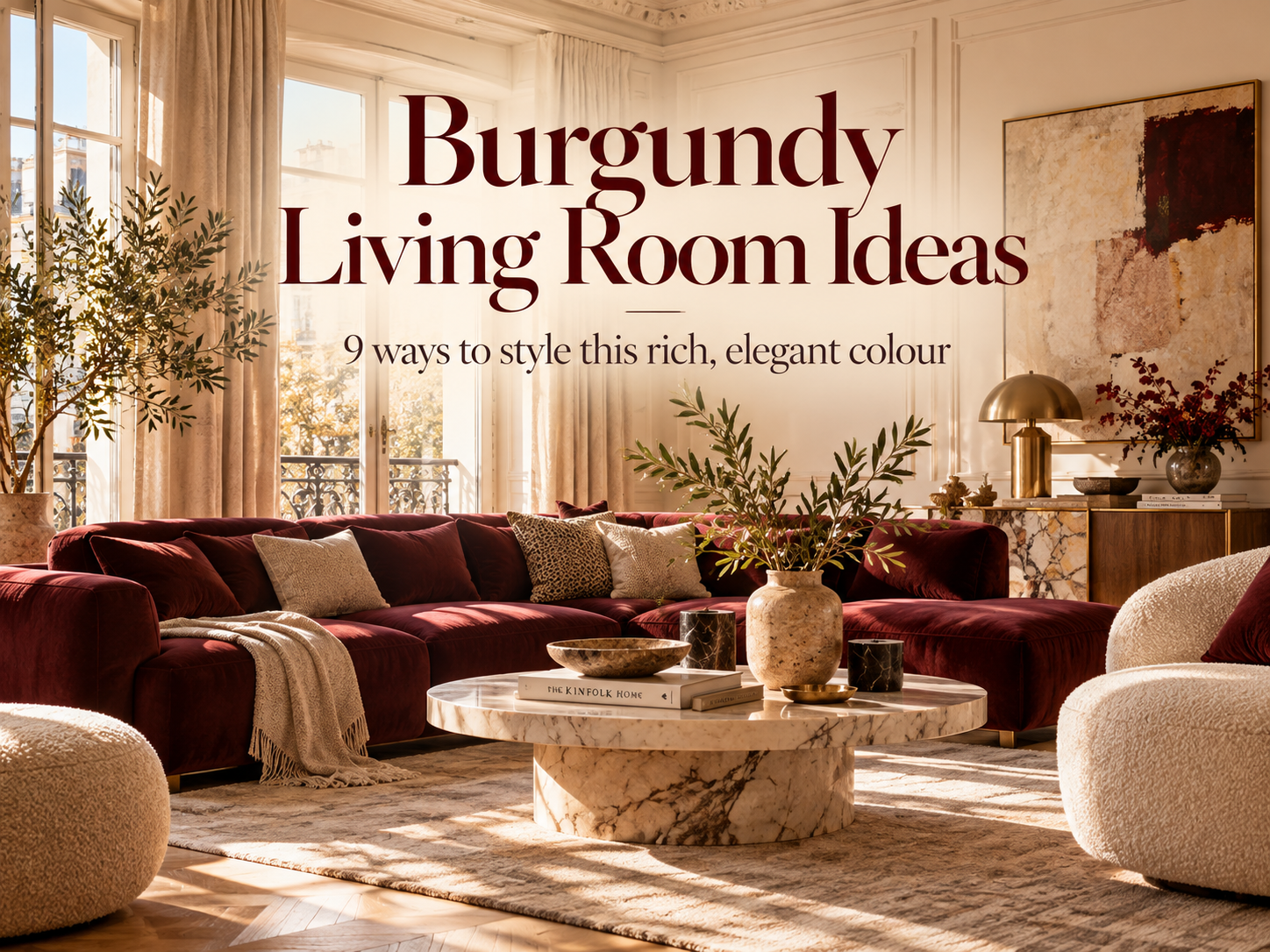
THE COLOUR EDIT / LIVING ROOM INSPIRATION
A little drama. A lot of warmth. Burgundy makes a room feel like a story worth staying in.
Some colours simply decorate a room. Burgundy changes its atmosphere. Somewhere between wine-red and deep plum, it brings warmth, character and a beautiful sense of depth — without asking every surface to be dark.
The secret is contrast: pale textiles, grounded greens, tactile fabrics and thoughtfully chosen objects. Whether you’re starting with a velvet sofa or one small cushion, these nine burgundy living room ideas offer a considered way to make the colour your own.
Let a Burgundy Sofa Lead the Room
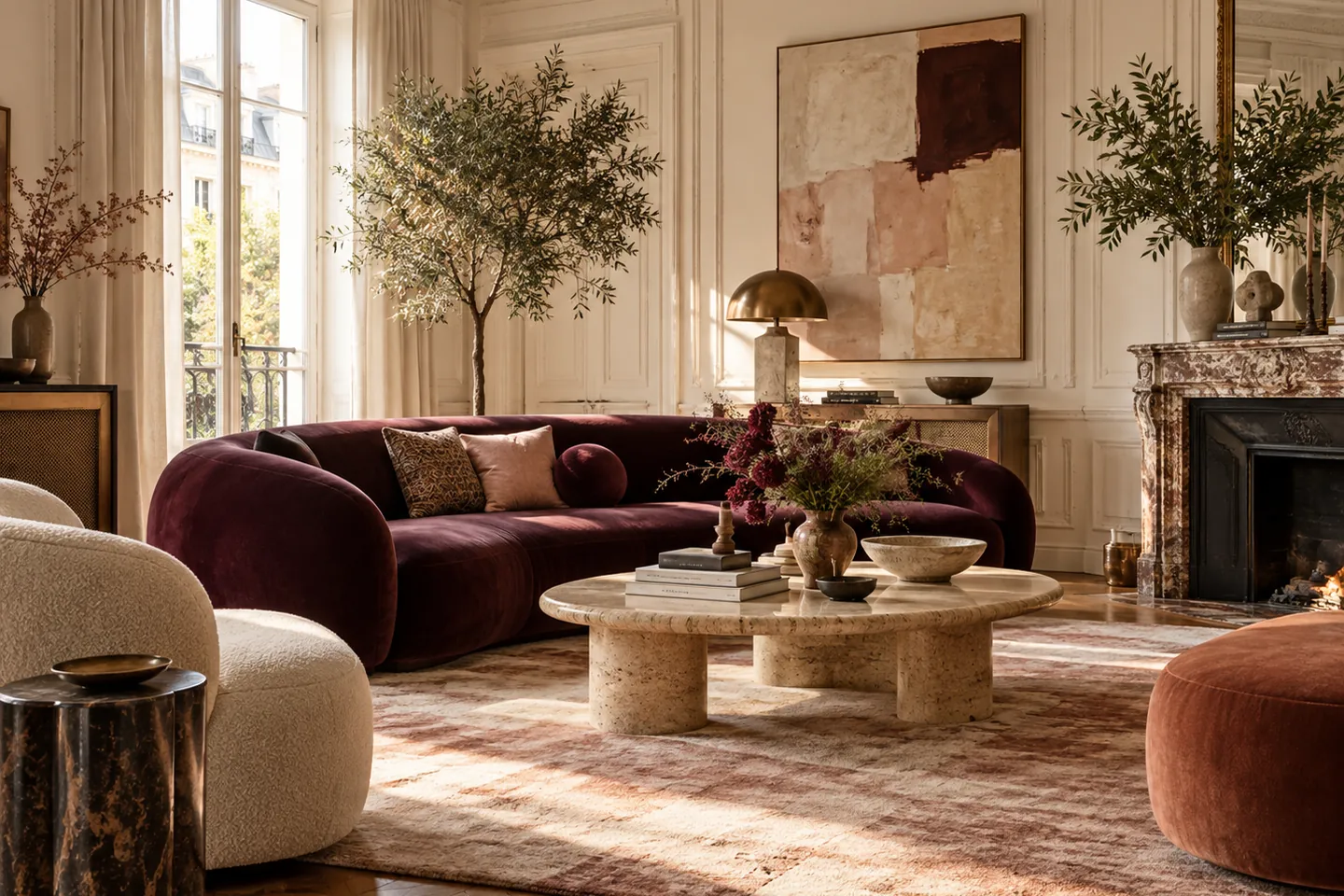
There is something instantly memorable about a burgundy sofa. It anchors a living room without needing a matching collection of accessories around it. A generously shaped velvet sofa feels especially inviting beside pale walls, while a streamlined silhouette creates a more tailored impression.
Before buying, check how the sofa looks in both daylight and evening light. Burgundy can shift from wine-red to plum depending on the fabric and the room. Order a fabric swatch where possible, and measure the entire sofa footprint, including the space needed to walk around it.
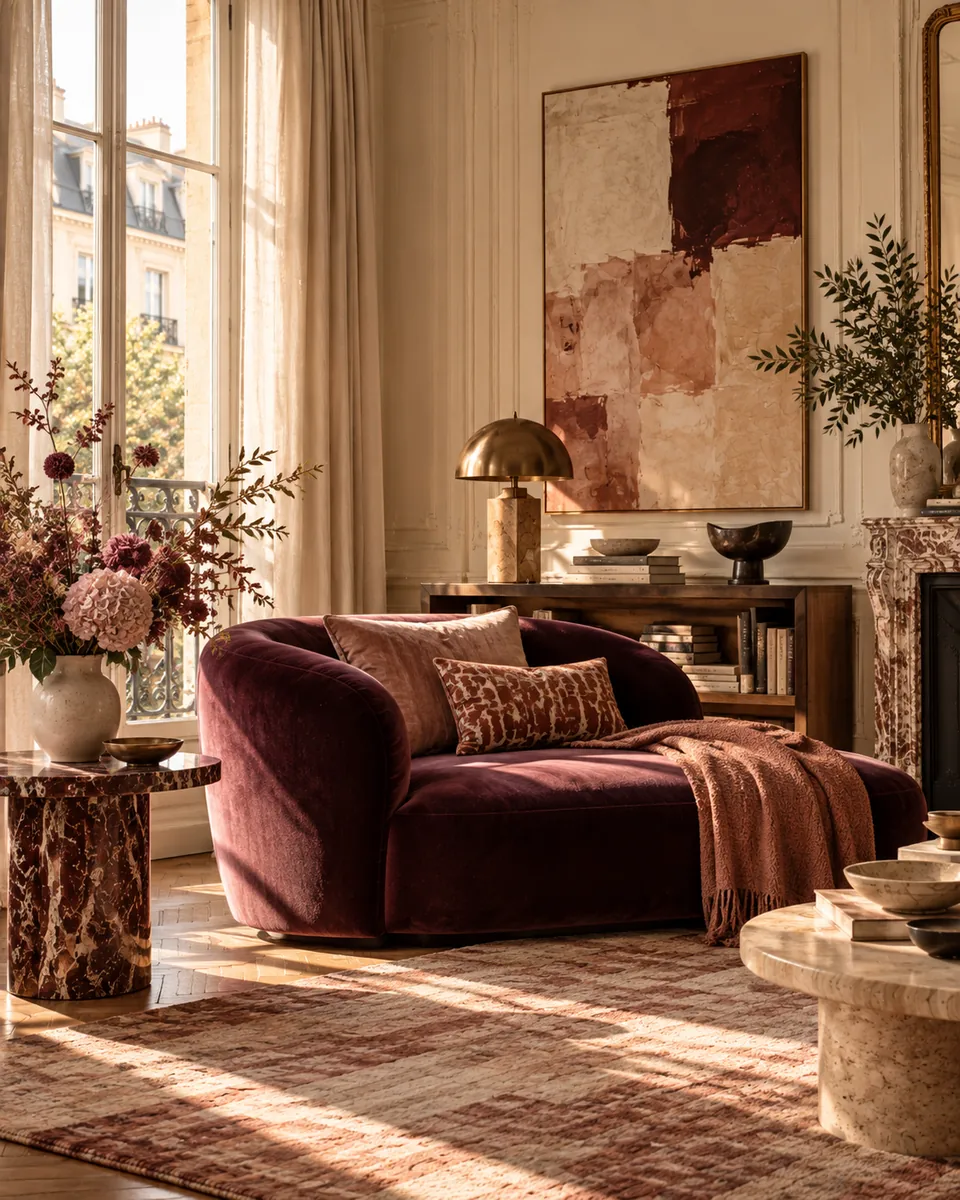
If a full-size sofa feels too bold, try a single burgundy armchair. You’ll get the same expressive colour without committing your whole seating area.
Keep the Backdrop Soft With Cream and Oatmeal
Burgundy feels particularly beautiful when it has somewhere light to rest. Warm white walls, an oatmeal rug and cream upholstery give the colour space to stand out. Think of these pale surfaces as a frame rather than an afterthought.
For a soft, tonal room, repeat slightly different neutrals instead of choosing one exact shade of beige. Linen curtains, a bouclé chair and a textured rug will each reflect light differently. That variation creates depth without relying on extra colours.
These are digital colour suggestions, not exact paint matches. Always test physical samples in your space.
Start Small With Velvet Cushions
Not ready to repaint or replace your sofa? Burgundy cushion covers are one of the simplest ways to experiment. On a light sofa, one or two rich velvet cushions can completely change the mood; on a brown or green sofa, burgundy creates a more layered, vintage-inspired palette.
Choose a mix of finishes. A burgundy velvet cushion beside woven linen and a subtly patterned cushion generally feels more collected than three identical covers. Make sure the covers fit your inserts properly so the shapes stay full and intentional.
Try Burgundy With Olive Green
It sounds bold, but olive green and burgundy share an earthy quality that makes them natural partners. Burgundy brings warmth; olive keeps the palette grounded. Together, they work beautifully with walnut, warm oak and cream.
You don’t need an olive green feature wall to test the pairing. A painted side table, a vintage-style chair or a few leafy plants can be enough. Keep metal finishes restrained so the room doesn’t become visually busy.
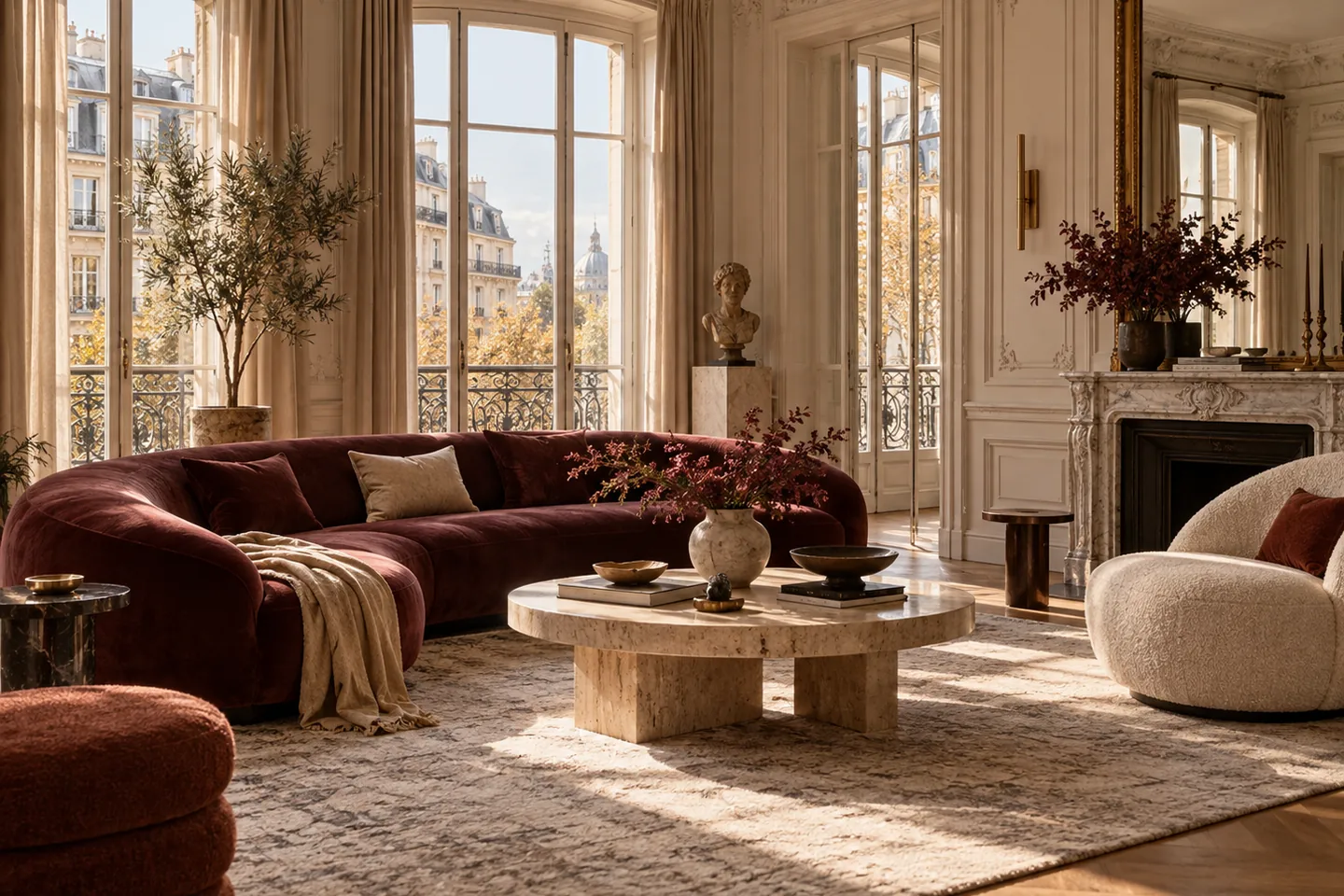
For a slightly fresher variation, replace olive with soft sage and add a touch of blush pink. The result feels less dramatic without losing personality.
EDITOR'S NOTE
Try the pairing on a small scale first: olive branches in a vase, a cream rug, a burgundy cushion and a warm wood table. You may find you already own half the palette.
Layer Textures Instead of Adding More Colours
A rich colour is only one ingredient in a welcoming living room. Texture is what makes it feel touchable. Combine velvet with washed linen, woven wool, softly grained wood and a little polished stone.
A cream throw draped over a burgundy sofa brings visual softness while making the colour feel less formal. In warmer months, use linen or cotton; in autumn and winter, a more substantial knit can make the same space feel cosier.
Use Brass Lighting for a Warm Evening Glow
Burgundy can look striking in daylight, but lighting determines how intimate it feels after sunset. Rather than using a single ceiling fixture, build a gentle mix of light sources at different heights.
A sculptural brass table lamp beside a sofa, a floor lamp by an armchair and a small accent light on a bookshelf make the room feel considered. Look for warm, comfortable light; if you use dimmable bulbs, check that the lamp and bulb are compatible.
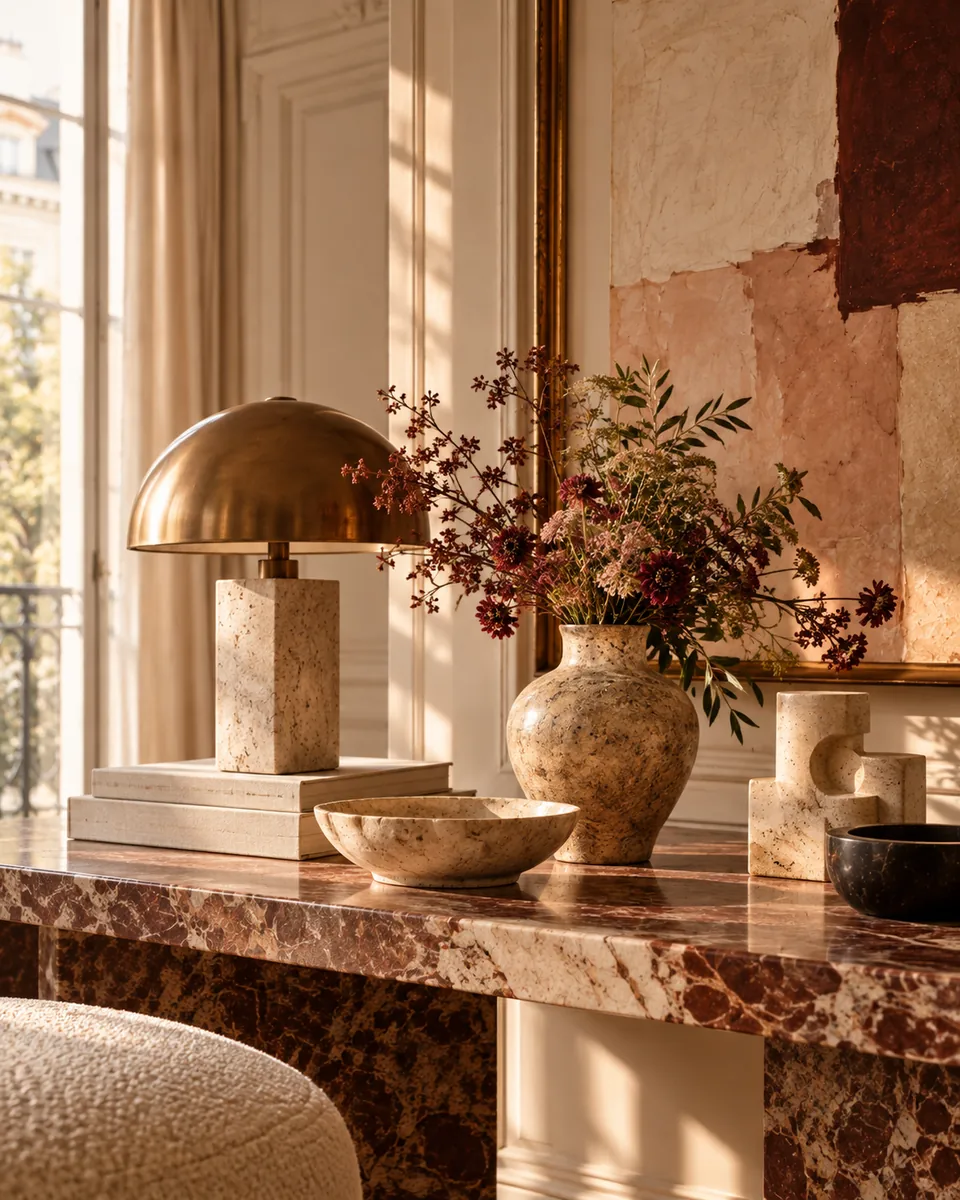
Brass works well here because it echoes the warmth of burgundy without having to match its colour directly. One beautifully chosen lamp often makes more impact than several small ornaments.
Consider a Burgundy Feature Wall
A painted feature wall can create a stronger sense of atmosphere than accessories alone. Behind a cream sofa or a pale art print, burgundy becomes a dramatic backdrop while the furniture stays visually light.
Test several paint samples on the actual wall and look at them morning, afternoon and evening. In north-facing rooms, a burgundy shade may read cooler or more purple; warmer natural light often reveals more red.
You can also paint the whole room if you want a cocooning effect. Smaller spaces do not have to be light by default. The best choice depends on the mood you enjoy and the lighting you can provide.
BEFORE YOU PAINT
Sample first, then decide. A colour seen on your phone is not a reliable substitute for paint in real daylight.
Bring in Stone, Walnut and Ceramics
Some of the most beautiful burgundy interiors are built around materials rather than matching furniture. A travertine coffee table adds a pale, mineral contrast. Dark walnut brings depth, while handmade-looking ceramics introduce natural texture.
Keep decorative groupings simple. Try a low vase, one art book and a small sculptural bowl on a coffee table, leaving enough clear space for everyday use. Different heights and shapes create interest; you do not need to fill the entire surface.
Repeat Burgundy in Just a Few Places
Once your main burgundy element is in place, introduce the colour in two or three other subtle ways. Perhaps the same wine-red appears in an abstract artwork, a cushion on the opposite chair or a small detail in the rug.
This creates rhythm across the room without making everything match. The trick is to vary the scale: one dominant element, one supporting accent and one tiny echo.
Then stop and look around. If the room already feels balanced, it probably doesn’t need another burgundy accessory.
What colours go with burgundy?
The best pairing depends on the atmosphere you want. You don’t need a rigid decorating formula; begin with the mood and the natural light in your room.
Burgundy + cream — Soft, luminous and quietly elegant. Especially beautiful with oak and natural linen.
Burgundy + olive — Earthy and layered. A confident combination for traditional and contemporary spaces.
Burgundy + blush — Romantic without being overly sweet when balanced with modern silhouettes.
Burgundy + chocolate — Deep and cocooning. Introduce a pale rug or curtains for some visual relief.
Burgundy + brass — Warm and sculptural. Best used as an accent through lighting and hardware.
Burgundy living room FAQs
Does burgundy make a small living room look darker?
It can, especially if you use it on large surfaces in a room with limited daylight. But it can also make a small living room feel intimate and intentional. Balance it with good lighting and lighter textures if you want an airier effect.
What curtains go with a burgundy sofa?
Warm ivory, oatmeal, natural linen and muted beige are versatile choices. For something bolder, try soft olive green or dusty blush, and compare fabric samples in your room before committing.
Is burgundy suitable for a modern living room?
Yes. Choose contemporary silhouettes, uncluttered surfaces and simple materials such as stone, walnut or brushed brass. One deep colour can make minimalist furniture feel less austere.
What is an easy way to try burgundy without buying a sofa?
Start with a cushion, throw, framed print or single small upholstered piece. Repeat the colour once elsewhere in the room and live with it for a few weeks before making a larger change.
A home with colour, character and soul.
The most memorable rooms don’t happen because every piece matches. They take shape slowly, through the things you love, the textures you reach for and the colours that make you feel at home. Burgundy can be one of those colours — expressive, welcoming and entirely your own.
Discover more palettes, textures and beautiful spaces in our curated journal.